Safflower Oil: Benefits, Uses & Why It Is a Healthy Cooking Oil
When it comes to choosing the right cooking oil for your family, the options can feel endless. Sunflower oil, groundnut oil, coconut oil, sesame oil and olive oil are all familiar choices—but there is another traditional and versatile oil that deserves more attention: safflower oil.
Safflower oil is made from the seeds of the safflower plant (Carthamus tinctorius). It has a naturally light texture and a mild taste, making it suitable for everyday cooking without overpowering the natural flavour of food.
For generations, safflower has been valued as an oilseed crop, and today safflower cooking oil is used for everything from everyday Indian cooking to frying, sautéing and salad preparation.
What Is Safflower Oil?
Safflower oil is a vegetable oil extracted from safflower seeds. Depending on the variety of safflower used, the oil can have different fatty-acid compositions.
Two major types are commonly discussed:
- High-linoleic safflower oil
- High-oleic safflower oil
High-oleic safflower oil contains a high proportion of monounsaturated fat, particularly oleic acid. USDA research identifies high-oleic safflower as an oil with improved oxidative stability compared with traditional higher-polyunsaturated varieties, making it useful for cooking applications. (ARS)
This is one reason high oleic safflower oil has become an increasingly interesting choice for modern cooking.
Safflower Oil Benefits
1. A Source of Unsaturated Fats
One of the most important characteristics of safflower oil is its fatty-acid profile.
High-oleic safflower oil is particularly rich in monounsaturated fat, while traditional high-linoleic safflower oil is rich in polyunsaturated fat. USDA nutritional data lists high-oleic safflower oil at approximately 10.2 g monounsaturated fat and 2.0 g polyunsaturated fat per tablespoon. (ARS)
Unsaturated fats are an important part of a balanced diet, which is why vegetable oils can have a place in everyday cooking.
2. Naturally Cholesterol-Free
Like other plant-based cooking oils, safflower oil contains no dietary cholesterol.
This makes safflower oil an attractive choice for people looking for a plant-based cooking oil without cholesterol.
However, it is important to remember that all cooking oils are calorie-dense, so the overall quantity used in the diet still matters.
3. Mild Taste for Everyday Cooking
Nobody wants their cooking oil to dominate the flavour of their food.
One advantage of safflower cooking oil is its relatively mild flavour. It can be used in a wide range of Indian dishes while allowing spices, vegetables and other ingredients to remain the stars of the dish.
From dal and vegetables to snacks and homemade recipes, safflower oil can fit naturally into everyday cooking.
4. Suitable for Different Cooking Methods
Safflower oil can be used for several common kitchen applications, including:
- Sautéing
- Stir-frying
- Shallow frying
- Baking
- Salad preparation
- Everyday Indian cooking
High-oleic safflower oil is particularly valued for cooking applications because its fatty-acid composition can provide greater oxidative stability. USDA research specifically identifies high-oleic safflower oil as suitable for heat-stable cooking applications. (APHIS)
5. A Versatile Cooking Oil
A good everyday cooking oil should be versatile.
Safflower oil can be used across different recipes without requiring a major change in cooking habits. Its light character makes it suitable for both traditional recipes and modern cooking.
That versatility is one of the reasons safflower oil continues to have a place in the edible-oil market.
Why Are Unsaturated Fats Important?
Not all dietary fats are the same.
Safflower oil contains predominantly unsaturated fats, depending on the variety used. High-oleic safflower oil is especially rich in monounsaturated fat.
The USDA notes that edible vegetable oils are generally sources of monounsaturated or polyunsaturated fats and are also sources of essential fatty acids and vitamin E. (Economic Research Service)
This is why choosing the right type and quality of cooking oil can be an important part of maintaining a balanced diet.
High-Oleic Safflower Oil vs Regular Safflower Oil
This is an important point that many consumers don’t know.
High-oleic safflower oil is specifically bred to contain a much higher proportion of oleic acid, a monounsaturated fatty acid.
Traditional high-linoleic safflower oil, on the other hand, contains substantially more linoleic acid, a polyunsaturated fatty acid.
Neither should simply be labelled “better” without considering how the oil is produced and how it will be used. However, high-oleic safflower oil has an advantage when greater oxidative stability is desirable. USDA research has specifically examined high-oleic safflower oil for this reason. (ARS)
Is Safflower Oil Good for Indian Cooking?
Yes, safflower oil can be a practical choice for Indian cooking.
Indian cuisine involves a huge variety of cooking techniques—from tempering spices and sautéing vegetables to shallow frying and preparing snacks.
Because safflower oil has a mild taste, it can complement rather than overpower the flavours of Indian spices.
It can be used for:
Dal • Sabzi • Upma • Poha • Paratha • Snacks • Stir-fries • Baking • Salad dressings
The important thing is to select a good-quality oil and use it appropriately as part of a balanced diet.
How to Choose Good Safflower Oil
Not every bottle of safflower oil is necessarily the same.
When buying safflower cooking oil, look at:
1. The type of safflower oil
Check whether it is high-oleic or high-linoleic.
2. The processing method
Consumers who prefer traditionally produced oils may specifically look for traditionally extracted or Ghana-pressed safflower oil.
3. Freshness
Oil should be properly packaged and stored away from excessive heat, light and moisture.
4. Quality and purity
Choose a trusted manufacturer that clearly identifies the product and its ingredients.
5. Packaging
Good packaging helps protect cooking oil from environmental factors that can affect quality over time.
Why Choose Traditionally Ghana-Pressed Safflower Oil?
There is something special about traditional oil-making.
Modern technology has made food production faster, but traditional extraction methods continue to be valued because they connect the product with a time-tested way of making edible oils.
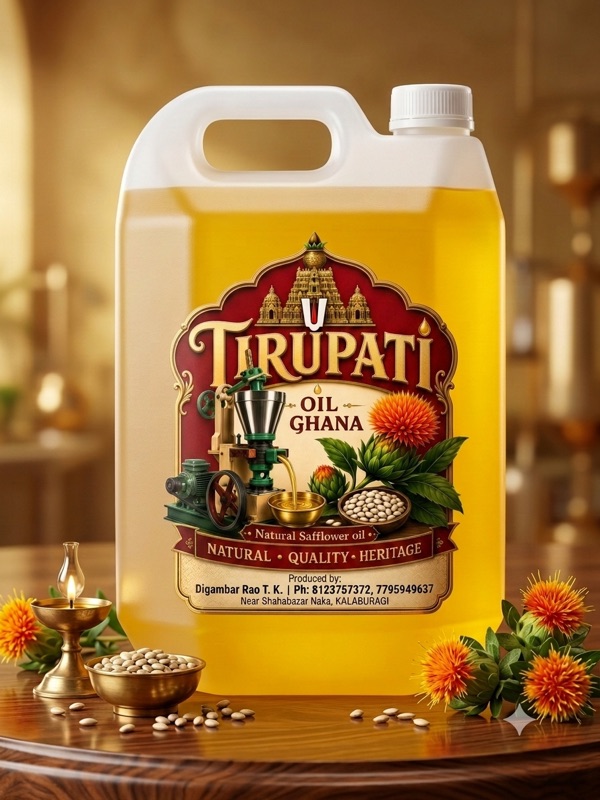
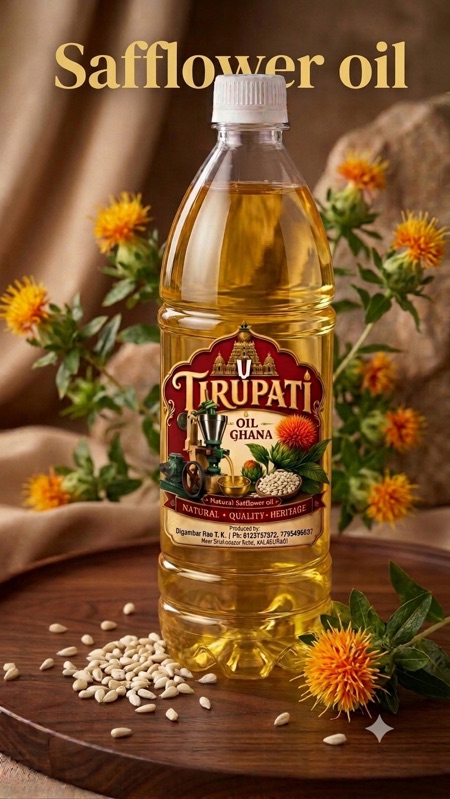
At Tirupati Oil Ghana, our focus is on bringing that traditional approach to today’s kitchen.
Our Natural Safflower Oil is made with care, keeping the focus on quality, traditional craftsmanship and the natural character of the oil.
For us, oil is not simply another grocery product.
It is something that becomes part of your family’s everyday meals.
Safflower Oil: A Simple Choice for Everyday Cooking
There is no single cooking oil that is perfect for every person or every recipe.
But if you are looking for a light, versatile vegetable oil with unsaturated fats and a mild taste, safflower oil is certainly worth considering.
High-oleic safflower oil, in particular, offers a fatty-acid profile dominated by monounsaturated fat and has been studied for its cooking stability. (ARS)
The best approach is simple: choose a quality oil, store it properly, use it in sensible quantities and maintain variety in your overall diet.
Choose Natural. Choose Quality. Choose Tradition.
At Tirupati Oil Ghana, we believe good oil begins with good raw material, careful processing and respect for traditional methods.
Our Natural Safflower Oil brings together the goodness of safflower seeds with the traditional Ghana-pressed approach that has been part of our journey for years.
Tirupati Oil Ghana — Natural Quality, Traditional Heritage.
For enquiries and orders:
📞 +91 9739888837
📞 +91 8123757372
Suggested Blog Labels
safflower oil, safflower oil benefits, safflower oil uses, healthy cooking oil, high oleic safflower oil, natural safflower oil, cooking oil, safflower oil nutrition, Ghana pressed oil, Tirupati Oil Ghana
SEO Keywords to target naturally
safflower oil
safflower oil benefits
safflower oil for cooking
high oleic safflower oil
natural safflower oil
healthy cooking oil
safflower oil nutrition
safflower oil uses
safflower cooking oil
best safflower oil
safflower oil for frying
Ghana pressed safflower oil
traditional safflower oil
Tirupati Oil Ghana