Traditional Oils: A Return to India's Natural Heritage
For generations, Indian households have relied on naturally processed oils for cooking, traditional wellness practices, hair care and skincare. Long before modern refining methods became common, families extracted oil from seeds and nuts using traditional techniques that focused on preserving the natural character of the oil.
Today, there is renewed interest in traditional oils, ghana-pressed oils and naturally processed cooking oils.
From the nutty character of sesame oil to the distinctive aroma of mustard oil and the versatility of coconut oil, each traditional oil has its own place in an Indian household.
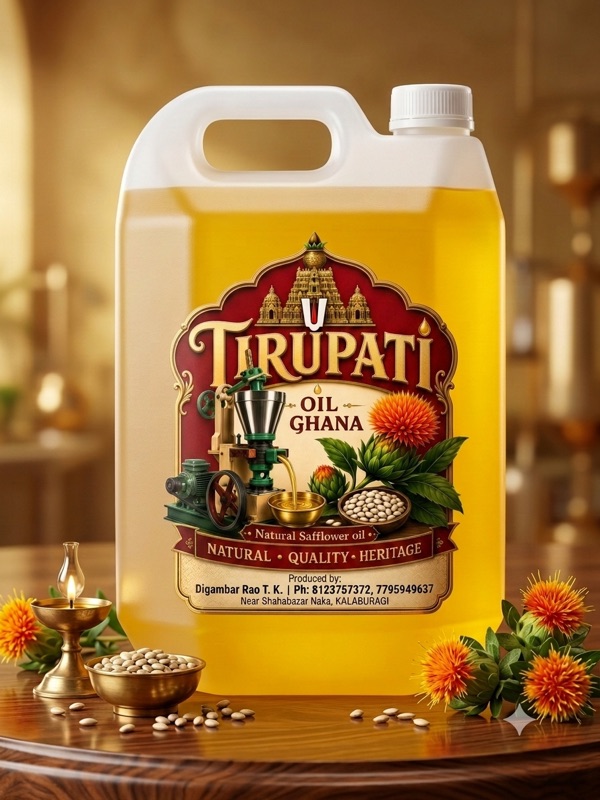
At Tirupati Oil Ghana, our philosophy is simple: respect traditional oil-making methods and bring naturally processed oils to modern families.
1. Safflower Oil – Kusumba / Kardi Oil
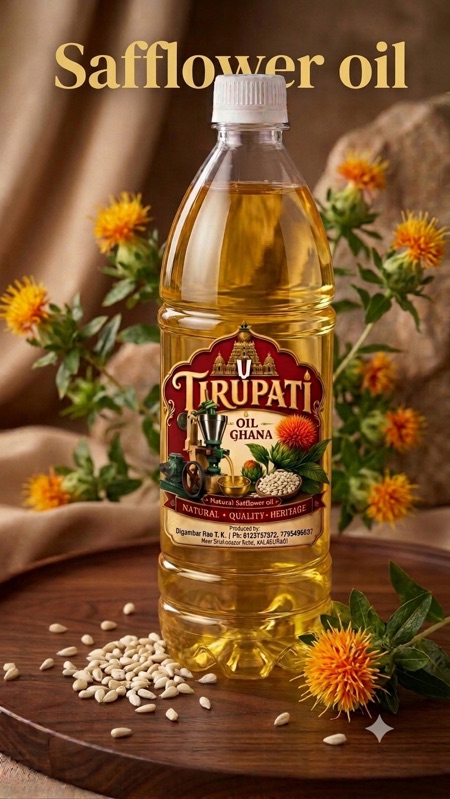
Safflower oil, commonly known in parts of India as Kusumba or Kardi oil, has a long history of cultivation and use.
Naturally processed safflower oil is valued for its mild character and its fatty-acid profile. It can be used as part of a balanced cooking routine, depending on the variety and processing method.
Why choose safflower oil?
Naturally processed: Traditional extraction methods can help retain the characteristic flavour and aroma of the oil.
Unsaturated fats: Safflower oil contains predominantly unsaturated fatty acids, making it a popular choice among people looking for alternatives to heavily refined cooking oils.
Vitamin E: Safflower oil naturally contains vitamin E, although the exact nutritional composition depends on the variety and processing.
Everyday cooking: Its relatively mild flavour makes it suitable for many Indian dishes.
For families searching for natural safflower oil in Kalaburagi, choosing a trustworthy producer and checking the product label, processing method and food-grade certification is important.
2. Coconut Oil – A Traditional Household Favourite
Coconut oil has been part of Indian kitchens and personal-care traditions for generations.
Its distinctive aroma and flavour make it particularly popular in South Indian cooking, while its traditional use extends to hair and skin care.
Why coconut oil remains popular
Cooking: Coconut oil can be used for selected cooking and baking applications.
Hair care: Coconut oil has a long-standing place in traditional Indian hair-care routines.
Skin care: Many people use coconut oil as a simple moisturising oil for dry skin.
Versatility: A single bottle can have multiple traditional household uses, depending on whether it is food-grade or intended specifically for personal care.
For everyday use, always choose an oil specifically labelled for its intended purpose.
3. Sesame Oil – Tila Taila
Known traditionally as Tila Taila, sesame oil occupies an important place in Indian food culture and Ayurveda.
The Ministry of AYUSH has included traditionally used oils such as sesame, mustard and coconut among oils that may be used in cooking as part of a healthy diet.
Sesame oil has a naturally rich aroma and distinctive nutty taste that works particularly well with many Indian recipes.
Traditional uses of sesame oil
Cooking: Sesame oil is widely used in Indian cooking, pickles, tempering and regional preparations.
Traditional wellness: Sesame oil has been used in several Ayurvedic practices for generations.
Personal care: Sesame oil is also traditionally used for massage and other household wellness practices.
Oil pulling: Sesame oil has also appeared in traditional oral-care practices. The Ministry of AYUSH describes sesame or coconut oil as options for traditional oil-pulling practices.
If you enjoy the traditional flavour of Indian cooking, sesame oil is one of the most versatile oils to keep at home.
4. Mustard Oil – Sarshapa Taila
Mustard oil, traditionally known as Sarshapa Taila, is recognised by its strong aroma, pungent flavour and distinctive character.
It has been a staple in many Indian regional cuisines, particularly in northern and eastern parts of the country.
Traditional uses of mustard oil
Indian cooking: Mustard oil is commonly used for tempering, pickling, marinades and regional recipes.
Distinctive flavour: Its pungent character can add depth to traditional dishes.
Traditional wellness: Mustard oil has also been used traditionally in massage and personal-care practices.
Because mustard oil has a strong flavour, it is particularly suited to dishes where its distinctive taste is part of the recipe.
5. Castor Oil – Eranda Taila
Castor oil, traditionally known as Eranda Taila, is different from the four cooking oils discussed above.
It has a long history of traditional and personal-care applications and is particularly well known for its characteristic thick texture.
Castor oil should not automatically be treated as a regular cooking oil. Its use depends on the product specification and intended purpose.
Traditional uses of castor oil
Personal care: Castor oil is commonly used in traditional hair and skin-care routines.
Traditional wellness: Castor oil has a long history of use in traditional systems of medicine.
Laxative use: Castor oil is also recognised medically for its laxative properties, but oral use should follow appropriate product directions and medical guidance. The U.S. FDA recognises castor oil among ingredients used as stimulant laxatives.
Always check the label before using castor oil internally, and do not assume that a cosmetic-grade product is suitable for consumption.
Traditional Oil vs Refined Oil: What Should You Look For?
The debate is not simply about whether one oil is "good" and another is "bad."
What matters is the quality of the raw material, processing method, freshness, storage, food-grade standards and how the oil is used.
When purchasing traditional or wood-pressed oils, look for:
- Clearly listed ingredients
- Appropriate food-grade certification for edible oils
- Transparent information about the extraction process
- Proper packaging
- Manufacturing and expiry information
- A trustworthy manufacturer
- Correct storage instructions
Most importantly, remember that oil is still a calorie-dense food. A balanced diet and appropriate portion sizes matter regardless of the type of oil you choose.
Why Traditional Oil-Making Still Matters
Traditional oil extraction is more than an old-fashioned process. It represents a connection between agriculture, craftsmanship and Indian food culture.
At Tirupati Oil Ghana, we believe traditional methods deserve a place in modern households when they are combined with proper hygiene, quality control and responsible food processing.
Our goal is to bring that traditional character to families looking for natural oils in Kalaburagi and across Karnataka.
Which Traditional Oil Should You Choose?
There is no single oil that is perfect for every purpose.
Safflower oil: A mild option for everyday cooking.
Coconut oil: Popular for cooking and traditional hair and skin care.
Sesame oil: Excellent for traditional Indian recipes and regional cooking.
Mustard oil: Ideal when you want the strong flavor associated with traditional Indian cuisine.
Castor oil: Primarily suited to specific traditional, personal-care or medicinal applications rather than general everyday cooking.
The best choice depends on your recipe, dietary needs, intended use and personal preference.
Frequently Asked Questions
Is wood-pressed oil the same as cold-pressed oil?
The terms are often used to describe oils extracted using relatively low-heat mechanical methods, but processing practices can vary between manufacturers. Always check the product's actual processing description.
Is safflower oil good for cooking?
Safflower oil can be used as a cooking oil, and its mild flavour makes it suitable for many dishes. Its nutritional profile varies depending on the safflower variety and processing method.
Can coconut oil be used for cooking?
Yes. Food-grade coconut oil is commonly used in cooking and baking and is particularly popular in many South Indian recipes.
Is sesame oil traditionally used in India?
Yes. Sesame oil has a long history in Indian cooking and traditional practices and is known as Tila Taila in Ayurveda.
Is mustard oil suitable for Indian cooking?
Mustard oil is traditionally used in many Indian regional cuisines, particularly for pickles, tempering, marinades and strongly flavoured dishes.
Can castor oil be used as cooking oil?
Castor oil should not be treated like ordinary edible cooking oils. Use it only for purposes specified on the product label. Oral medicinal use should follow appropriate directions and professional advice.
Bring Traditional Oil Back to Your Kitchen
The renewed interest in traditional oils reflects something simple: many Indian families are rediscovering the value of familiar ingredients and traditional food practices.
Whether you choose safflower oil, coconut oil, sesame oil, mustard oil or another traditional oil, focus on quality, appropriate use and trustworthy sourcing.
At Tirupati Oil Ghana, we continue to honor traditional oil-making while maintaining the quality standards expected by today's families.
Traditional roots. Natural oils. Quality you can trust.
Tirupati Oil Ghana
For enquiries and orders:
📞 +91 9739888837
📞 +91 8123757372
Choose natural. Choose tradition. Choose quality.